

Blog

2026-08-26 18:20:52
Developing a new mechanical or electronic component often requires several manufacturing stages before a product is ready for mass production. A prototype may be needed to verify dimensions and assembly, while the final production process may require a different balance of cost, precision, surface quality, and production volume.
For this reason, manufacturers need to understand how Prototyping Machining, CNC Machining, Die casting, and Assembly Services can work together during product development. Choosing the appropriate process at each stage can help reduce development risks and create a smoother transition from engineering samples to production parts.
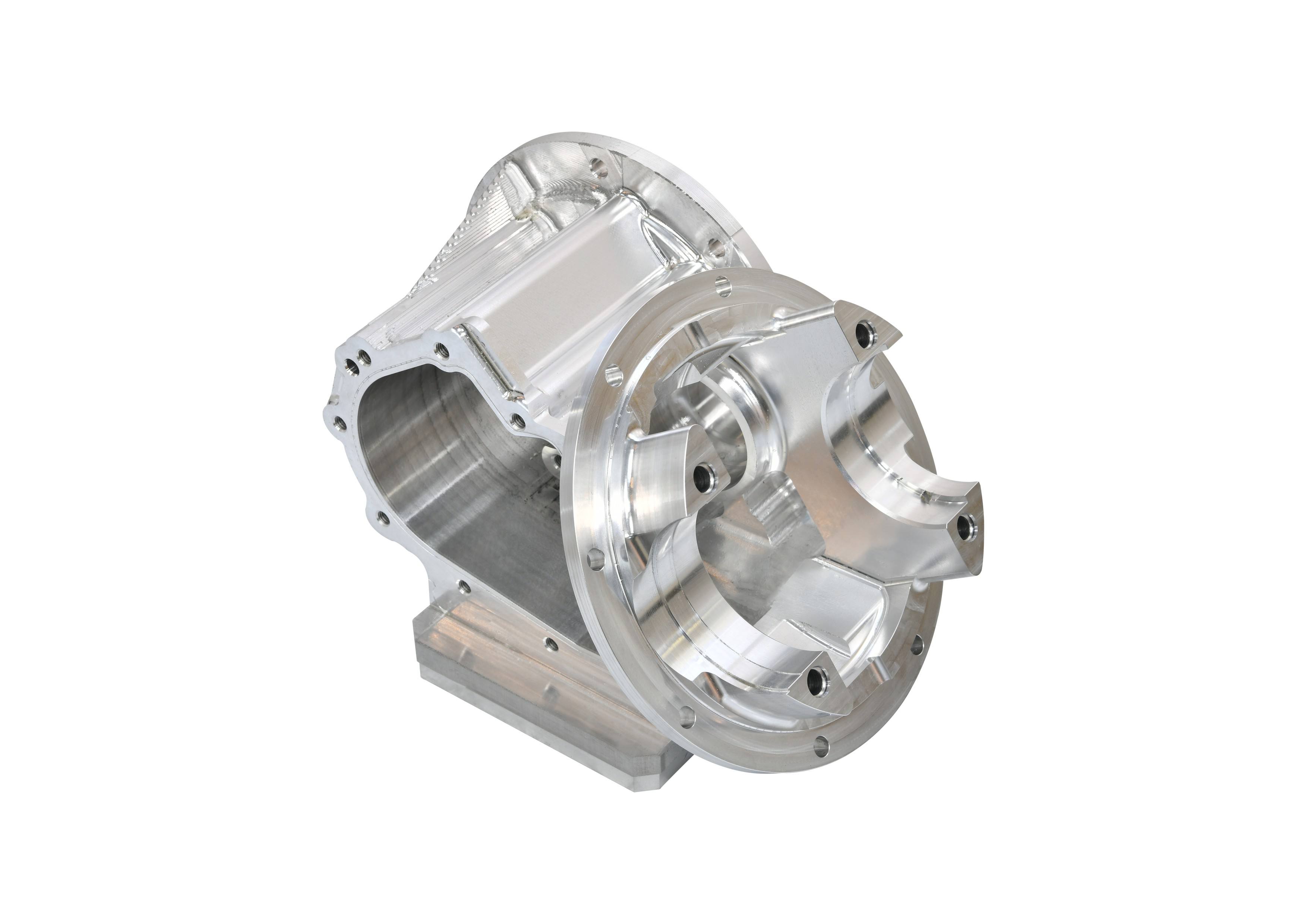
Before investing in production tooling, manufacturers often need physical parts to verify whether a design works as expected. CAD models can provide important information, but a physical prototype can reveal issues that may not be obvious during digital design.
Prototyping Machining allows engineers to produce functional parts directly from CAD drawings or 3D models. These prototypes can be used to evaluate dimensions, fit, appearance, assembly relationships, and mechanical performance.
Typical applications include:
Engineering validation
Design verification
Assembly testing
Functional testing
Pre-production samples
Product development iterations
CNC machining is particularly useful for prototypes that require accurate dimensions or functional features. Unlike processes that require dedicated molds or tooling, machining can produce a part directly from a digital design using cutting tools.
This makes CNC machining practical when engineers expect several design revisions during the development process. Changes to holes, pockets, mounting points, external dimensions, or other features can be incorporated into a new machining program without requiring a completely new production mold.
For metal prototypes and precision engineering components, CNC machining can therefore provide a practical bridge between product design and production validation.
Once a component moves from prototype development toward higher production volumes, manufacturers may consider Die Casting as an alternative production method.
Die casting uses a reusable mold to produce metal components with consistent geometry. It can be suitable for applications where a large number of similar parts are required and where production efficiency becomes more important.
Compared with machining every component from a solid block of material, die casting can offer advantages for suitable high-volume designs. However, the initial tooling investment means that the process needs to be evaluated carefully according to expected production quantities and product requirements.
The two processes serve different manufacturing requirements. CNC machining removes material from a workpiece using computer-controlled cutting tools, while die casting forms metal inside a mold.
Manufacturers should consider several factors when comparing the two:
Production volume: CNC machining can be flexible for prototypes and lower-volume production, while die casting can become more attractive for larger production quantities.
Design changes: CNC machining can accommodate design revisions without changing a production mold.
Geometry: Complex cast geometries may be suitable for die casting, while machining can provide precise finishing features.
Tolerance: Critical dimensions may require additional machining after casting.
Tooling investment: Die casting requires dedicated tooling, while CNC machining generally relies on machine programming and workholding.
In some production programs, the two processes can also be used together rather than treated as competing alternatives.
Die-cast components may contain important features that require tighter dimensional control than the casting process can provide on its own. In these cases, CNC machining can be used as a secondary finishing process.
Machining can be applied to areas such as:
Precision mounting surfaces
Threaded holes
Critical bores
Locating features
Flat reference surfaces
Assembly interfaces
This combination allows manufacturers to use the production efficiency of casting while using CNC machining where greater dimensional accuracy is required.
Producing individual components is only one part of the manufacturing process. Many products require multiple machined, cast, or purchased components to be combined into a finished assembly.
An Assembly Service can help simplify this process by allowing components to be inspected, prepared, and assembled before delivery.
Depending on the product, assembly operations may include:
Component fitting
Fastener installation
Subassembly integration
Functional inspection
Final quality checks
Packaging of completed assemblies
Integrating assembly into the manufacturing process can reduce the number of separate suppliers that a buyer needs to coordinate.
A well-planned manufacturing strategy does not necessarily use the same process throughout the entire product lifecycle. The best process may change as the product moves from prototype to validation and finally to volume production.
A typical development path may look like this:
Develop the initial CAD design.
Produce a prototype using CNC machining.
Test dimensions, fit, and function.
Modify the design based on test results.
Evaluate production volume and manufacturing costs.
Select CNC machining, die casting, or a combination of processes.
Complete secondary machining and finishing where required.
Integrate components through assembly services.
Perform final inspection before shipment.
This approach allows manufacturers to validate the design before making larger production investments.
The correct manufacturing process depends on the specific product and production requirements. Buyers should provide manufacturers with sufficient technical information before requesting a manufacturing recommendation.
Important information includes:
3D CAD files
Technical drawings
Material requirements
Dimensional tolerances
Surface finish requirements
Prototype quantity
Expected annual production volume
Assembly requirements
With this information, a manufacturing partner can evaluate whether CNC machining, prototyping, die casting, secondary machining, or assembly is the most appropriate solution.
Product development often requires more than one manufacturing process. Prototyping Machining can help engineers validate a design before production, while CNC machining can provide precision features and flexible manufacturing. As production volumes increase, Die Casting may become suitable for certain component designs, with CNC machining used for critical finishing operations.
For products containing multiple components, an integrated Assembly Service can further simplify the manufacturing and supply process.
By evaluating the product lifecycle, production volume, dimensional requirements, tooling investment, and assembly needs together, manufacturers can develop a more efficient path from prototype to production.