

Blog


2026-07-15 16:02:27
Finding a reliable CNC turning service provider is one of the most important decisions for manufacturers, engineers, and purchasing teams. A qualified supplier does not only need advanced machining equipment, but also requires strong engineering capability, stable quality control, and flexible production support.
For many OEM companies, the biggest challenge is not finding a CNC Machining factory, but finding a long-term manufacturing partner who can consistently deliver accurate parts, meet deadlines, and support projects from prototype development to final production.
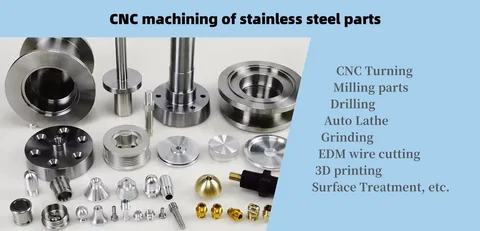
Although CNC turning is a mature manufacturing process, many customers still experience problems when working with suppliers. These challenges can directly affect project schedules, production costs, and product quality.
Precision components require strict tolerance control and consistent manufacturing processes. Without proper inspection procedures and experienced operators, even small variations can lead to assembly problems, rework, and increased production costs.
Some suppliers may have limited production capacity or inefficient workflows, resulting in delayed deliveries. For OEM projects, production delays can affect the entire supply chain.
A professional CNC turning manufacturer should not only produce parts according to drawings but also provide valuable feedback during the design stage. Poor communication between customers and suppliers may cause misunderstandings related to materials, tolerances, and manufacturing requirements.
Many manufacturers need prototypes or low-volume production before mass manufacturing. However, some suppliers focus only on large orders and cannot provide flexible solutions for smaller quantities.
Choosing a CNC turning partner requires more than comparing prices. A reliable supplier should have comprehensive capabilities covering machining technology, quality management, and customer support.
A professional CNC turning manufacturer should have modern equipment and experienced technicians to handle different part requirements.
Important capabilities include:
Precision CNC turning
CNC Milling and turning combined machining
Multi-axis machining
Prototype machining
Low-volume and production manufacturing
These capabilities allow manufacturers to produce complex components with higher efficiency and accuracy.
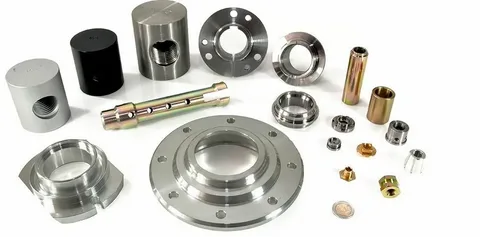
Quality is a key factor when selecting a CNC Machining supplier. A reliable manufacturer should establish a complete inspection process throughout production.
Typical quality control procedures include:
Incoming material inspection
First article inspection (FAI)
In-process inspection
Final dimensional inspection
Quality documentation and inspection reports
These procedures help ensure every component meets customer specifications and reduces the risk of production issues.
The best CNC machining suppliers act as manufacturing partners rather than simple part suppliers. Before production begins, engineers can analyze designs and provide suggestions regarding:
Material selection
Machining feasibility
Tolerance optimization
Cost reduction opportunities
Design for Manufacturing (DFM) support can help customers improve part performance while reducing unnecessary manufacturing costs.
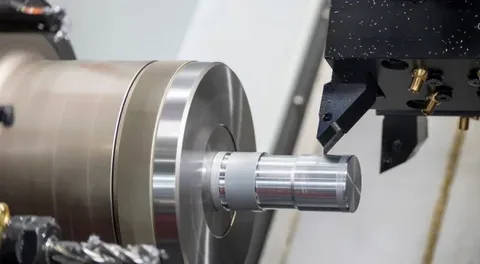
CNC turning can process a wide range of materials depending on application requirements. Selecting the correct material is essential for achieving the required strength, durability, and performance.
| Material | Common Applications |
|---|---|
| Aluminum | Lightweight components, electronics, automotive parts |
| Stainless Steel | Medical equipment, industrial parts, corrosion-resistant components |
| Brass and Copper | Electrical components and precision fittings |
| Titanium | Aerospace and high-performance applications |
| Engineering Plastics | Insulation parts, medical and industrial components |
High-precision CNC turning depends on multiple factors, including machine stability, tooling selection, machining parameters, and inspection methods.
Professional CNC turning services achieve better accuracy through:
Stable CNC equipment
Optimized cutting parameters
High-quality cutting tools
Professional programming
Precision measurement equipment
By combining advanced technology with experienced manufacturing teams, CNC turning suppliers can produce complex parts with consistent quality.
For many customers, working with multiple suppliers increases communication costs and creates difficulties in quality management. A one-stop CNC machining supplier can simplify the entire manufacturing process.
A complete CNC machining solution may include:
CNC turning
CNC milling
5-axis machining
Surface finishing
Quality inspection
This integrated approach helps customers reduce supplier management complexity, shorten production cycles, and achieve more reliable results.
MINGNON CNC provides one-stop CNC machining solutions for customers requiring precision components and customized manufacturing services.
Our capabilities include CNC turning, CNC milling, multi-axis machining, prototype production, and customized CNC parts manufacturing. With professional engineering support and quality-focused production processes, we help customers transform designs into reliable finished components.
From small batch prototypes to production orders, MINGNON CNC works closely with customers to provide flexible and efficient manufacturing solutions.
Choosing the right CNC turning service provider can significantly impact product quality, production efficiency, and overall project success. A reliable partner should combine machining expertise, strict quality control, flexible production capability, and responsive communication.
By working with an experienced one-stop CNC machining manufacturer, companies can simplify their supply chain and achieve better results from prototype development to final production.
CNC turning is mainly used to manufacture cylindrical and rotational parts, including shafts, bushings, fittings, and precision mechanical components.
Yes. CNC turning is suitable for prototypes, low-volume production, and large-scale manufacturing depending on project requirements.
Customers usually need to provide CAD drawings, 3D models, material requirements, surface finish requirements, and production quantities for an accurate quotation.