

Blog

2026-04-22 15:59:58
When it comes to precision manufacturing of aluminum parts, two prominent methods stand out: Die casting and pressure die casting. While both are integral in producing high-quality aluminum components, their differences in process and application are key to understanding which technique best suits your needs.
At Mingnon CNC, a leading provider of custom die casting services, we specialize in creating durable, precise, and cost-effective aluminum parts using the most advanced die casting techniques. Our die casting and pressure die casting solutions are tailored to a range of industries, including automotive, aerospace, and electronics. Our custom services are designed to meet the specific requirements of our clients, ensuring that each part is built with precision and efficiency.
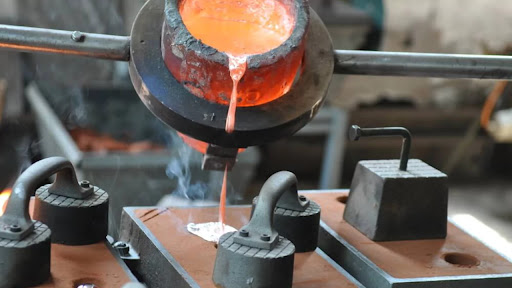
Die Casting Process: How It Works
Die casting is a process where molten aluminum is injected into a mold under high pressure, solidifying quickly to form a detailed part. The two main types of die casting include:
Cold Chamber Die Casting: In this method, molten metal is poured into the chamber, and then a plunger forces the metal into the mold. This method is ideal for high melting point metals like aluminum.
Hot Chamber Die Casting: Here, the molten metal is directly injected from a chamber into the mold, which is quicker but less suited for metals with high melting points.
The resulting products are known for their smooth finishes, intricate designs, and overall durability. These qualities make die casting a perfect choice for applications requiring fine details and high volume production.
Pressure die casting, a variation of die casting, involves injecting molten metal into a mold under significantly higher pressure. This method is particularly suitable for producing parts that require extra strength, precision, and thin-walled designs. The pressure ensures that the molten aluminum fills all intricate areas of the mold, making it ideal for complex geometries.
One of the key advantages of pressure die casting is its ability to produce parts with superior surface finishes and tighter tolerances. This process is ideal for industries where high precision is non-negotiable, such as aerospace and automotive manufacturing.
Injection Pressure: Pressure die casting uses much higher pressure than traditional die casting, which results in finer details and tighter tolerances.
Cost Efficiency: Die casting is often more cost-effective for high-volume, simple designs, while pressure die casting is better suited for complex and precision-demanding parts.
Strength and Durability: Pressure die casting results in parts with better mechanical properties, making them more suitable for high-stress applications.
Both die casting and pressure die casting have a wide range of applications:
Automotive: These techniques are commonly used to produce lightweight, durable components like engine parts, transmission housings, and exterior body parts.
Aerospace: Pressure die casting, in particular, is often used for making high-precision parts that require optimal strength-to-weight ratios.
Electronics: Enclosures for electrical components and computer housings are often made using die casting due to its ability to create thin-walled, detailed designs.
For more information about our custom die casting services and to view the full range of products, please visit Mingnon CNC Die Casting Services.
At Mingnon CNC, we are dedicated to providing top-tier casting solutions to meet your business needs. Our team of experts ensures that every project, large or small, is executed with precision, ensuring that your components are of the highest quality.