

Blog


2025-11-12 16:21:17
In today’s advanced manufacturing world, precision, consistency, and speed are critical. Whether you are producing small custom parts or large-scale industrial components, CNC machines have revolutionized how materials are shaped and products are made. But what exactly is a CNC machine, how does it work, and why has CNC Machining service become an essential part of nearly every manufacturing industry?
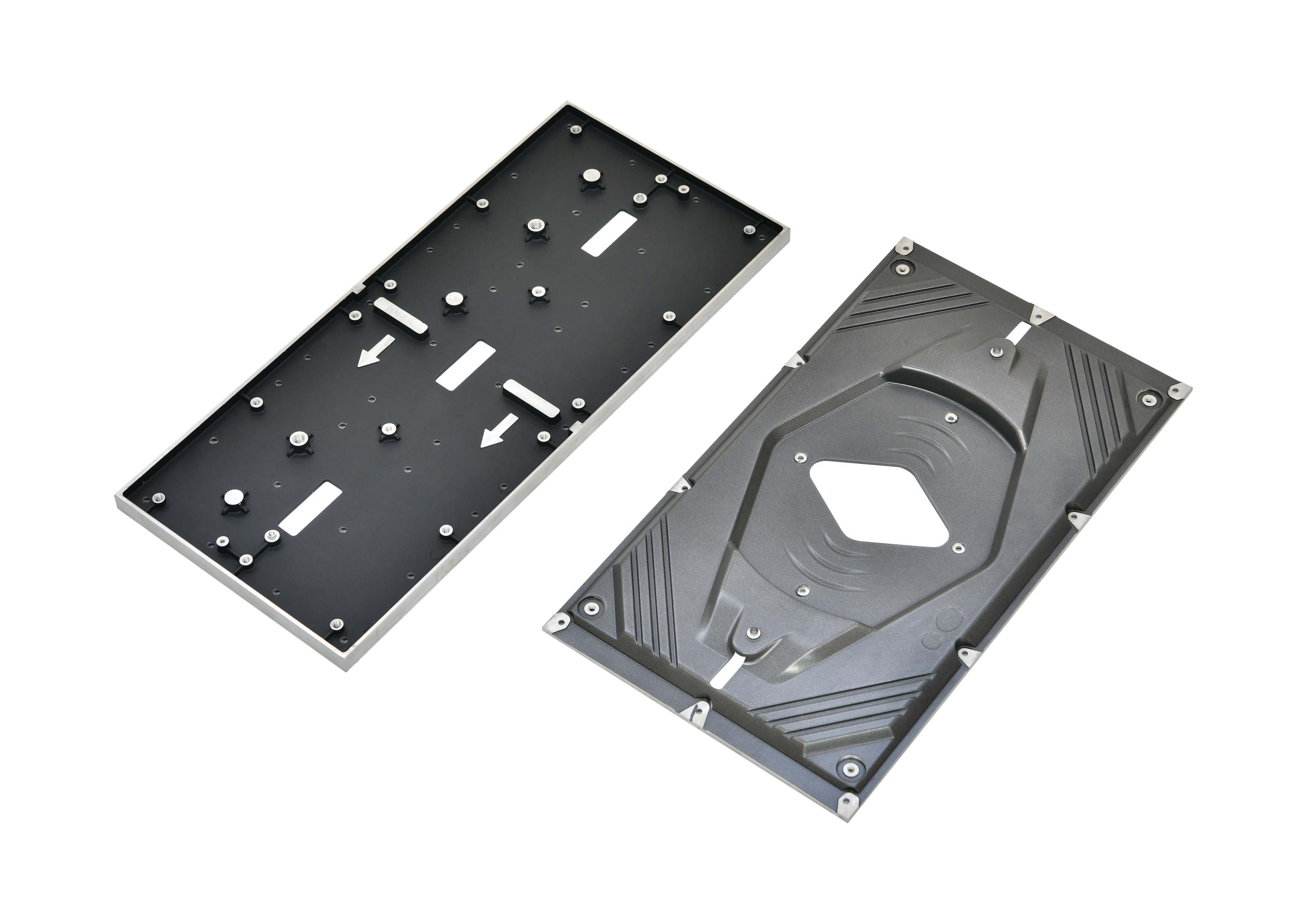
A CNC machine (Computer Numerical Control machine) is a type of automated machine tool that uses computer programming to control the movement of cutting tools and machinery. Unlike manual machining, where operations are performed by human operators, CNC machines follow precise digital instructions created using CAD (Computer-Aided Design) and CAM (Computer-Aided Manufacturing) software.
In simple terms, a CNC machine reads a programmed code — often referred to as a G-code — which dictates where and how the machine should move. This enables complex, repeatable, and highly accurate manufacturing of parts made from materials like metal, plastic, wood, or composites.
The working principle of a CNC machine involves several key steps:
Design Creation:
The process begins with creating a 3D design of the part using CAD software.
Program Conversion:
The CAD design is converted into a machine-readable file (G-code or M-code) using CAM software.
Machine Setup:
The workpiece is fixed to the machine table, and the correct cutting tools are installed.
Execution:
The CNC controller interprets the code and drives motors and actuators to move the cutting tools in precise paths along multiple axes (typically X, Y, and Z).
Quality Inspection:
The finished part is inspected to ensure it meets the required tolerances and specifications.
Through this fully automated process, CNC machining service providers can produce parts with exceptional consistency, even for complex geometries that would be nearly impossible to achieve manually.
There are many types of CNC machines, each designed for specific tasks. The most common include:
CNC milling machines use rotating cutting tools to remove material from a stationary workpiece. They are ideal for creating flat surfaces, slots, holes, and complex contours. Multi-axis milling machines (such as 3-axis, 4-axis, and 5-axis models) can perform intricate machining from multiple angles.
CNC lathes rotate the workpiece while a fixed cutting tool removes material. This process is mainly used for cylindrical or conical components such as shafts, bushings, and connectors.
These machines specialize in drilling precise holes in exact positions. Modern CNC drilling systems can perform automatic tool changes for different hole sizes and depths.
Used for surface finishing, CNC grinding machines deliver superior smoothness and precision by removing very fine material layers.
EDM uses electrical sparks to shape hard metals that are difficult to machine using traditional cutting tools. It’s often used in mold making and aerospace applications.
Each machine type plays a vital role in CNC machining services, allowing manufacturers to create custom parts for various industries.
The rise of CNC technology has transformed modern production. Here are the most significant benefits:
CNC machines can achieve tolerances within micrometers, ensuring every component matches the exact design specification. This is critical in industries such as aerospace, medical, and automotive manufacturing.
Once a program is set, the machine can repeat the same operation thousands of times without variation, ensuring mass production of identical parts.
CNC machining significantly reduces production time. Automated tool changes and simultaneous multi-axis movements increase productivity compared to manual methods.
Modern CNC machines can work with various materials — aluminum, stainless steel, brass, copper, titanium, plastic, and composites. By adjusting programming and tools, CNC machining service providers can easily switch from one product to another.
Automation minimizes direct human involvement during cutting operations, reducing workplace injuries and operator fatigue while improving quality control.
Although CNC machines require an initial investment, they save time, material, and labor costs in the long term due to their efficiency and reduced waste.
CNC machines are used across almost every manufacturing industry. Below are some of the most common applications:
| Industry | CNC Applications |
|---|---|
| Automotive | Engine parts, shafts, gears, brake systems |
| Aerospace | Turbine blades, housings, structural components |
| Medical | Surgical instruments, implants, precision devices |
| Electronics | Connectors, housings, heat sinks |
| Industrial Equipment | Machine bases, gears, tool holders |
| Consumer Products | Custom enclosures, metal accessories, prototypes |
No matter the industry, CNC machining services play a key role in ensuring that every product is made with accuracy, reliability, and consistency.
A professional CNC machining service provider offers more than just manufacturing; it delivers end-to-end production support — from design optimization to finishing and quality inspection.
CNC experts can help modify your CAD models for better manufacturability, ensuring efficient production without compromising quality.
They can recommend the right materials based on your application — whether it requires strength, corrosion resistance, or lightweight properties.
CNC machining services are ideal for both rapid prototyping and mass production, offering flexibility for all project scales.
Every part is inspected with precision measuring tools (CMM, micrometers, calipers) to guarantee exact tolerance compliance.
CNC machining services often include post-processing options such as anodizing, polishing, sandblasting, plating, and powder coating to enhance performance and aesthetics.
By choosing a reliable CNC machining service, companies can ensure fast turnaround times, superior quality, and cost-effective production for custom parts.
The evolution of CNC technology continues, with innovations that improve precision, automation, and connectivity. Some notable trends include:
Integration with AI and IoT: Smart CNC systems can analyze data, detect tool wear, and optimize cutting paths in real time.
Hybrid Manufacturing: Combining CNC machining with additive manufacturing (3D printing) for complex geometries.
Automation and Robotics: Robotic arms handle material loading/unloading, reducing downtime and increasing efficiency.
Sustainability: Eco-friendly CNC machining services now emphasize material recycling, energy efficiency, and minimal waste.
These advancements make CNC machining even more essential in future smart factories and Industry 4.0 environments.
Even with the rise of 3D printing and automation, CNC machining remains unmatched for tight tolerances, surface quality, and material versatility.
From one-off prototypes to large-scale production, CNC machining services deliver superior mechanical strength, consistent performance, and scalable results.
Manufacturers rely on CNC machines not only for precision but also for their adaptability in producing everything from delicate components to heavy-duty industrial parts.
A CNC machine is far more than just a piece of equipment — it is the cornerstone of modern manufacturing. By transforming digital designs into real, tangible components with unmatched precision, CNC technology has reshaped industries across the globe.
Whether you are designing aerospace components, medical devices, or consumer electronics, partnering with an experienced CNC machining service provider ensures your products meet the highest standards of accuracy, durability, and efficiency.
In the era of smart manufacturing, CNC machines remain the driving force behind innovation — turning ideas into reality, one precision-cut part at a time.